

There’s a DJI Osmo Pocket 3 sitting in my bag right now.
It gimbal-stabilizes everything automatically. The footage it produces looks like something a professional shot on a slow Tuesday. By every technical metric that camera review channels love to list, it should be winning every time I reach into my bag.
And yet. More often than I’d like to admit, I pull out my phone instead.
This isn’t a review of either device. It’s something more honest — the actual pattern of when I choose one over the other, and why the answer isn’t always what I expected when I first bought both.
The moment that settled it for me
I was in the fan zone at the Linkin Park concert at Brigade Innovation Gardens. January 23rd. Their first ever show in India, and I had managed to get into the fan zone — close enough to actually see the band, not just the screens. Mike Shinoda and Emily Armstrong at the mic, stage lights cutting through the dark, the crowd completely losing it.
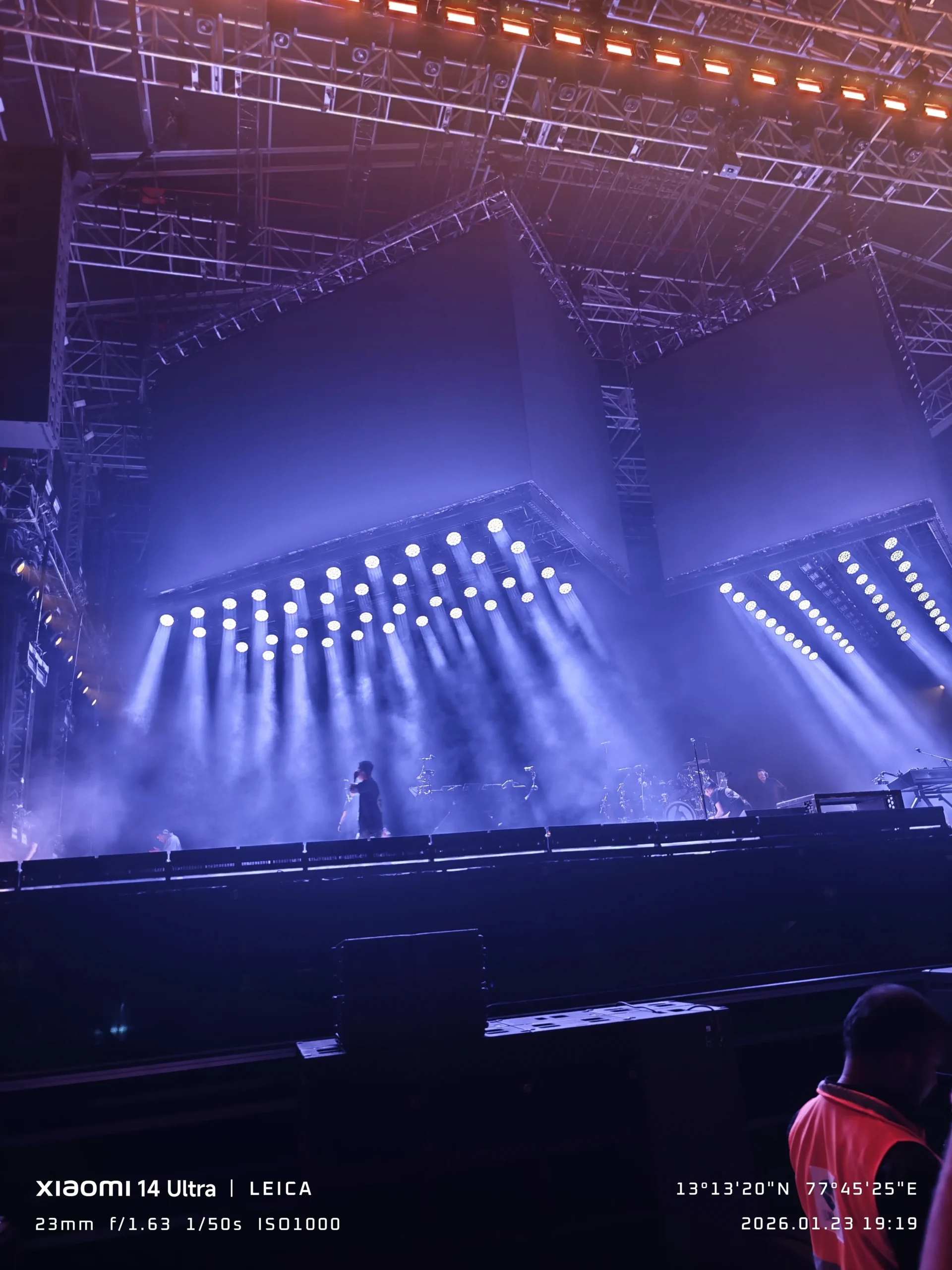
I had the pocket camera in my bag. I used my phone.
Not because I forgot it was there. Because in a fan zone, with a moving performer, mixed stage lighting, and a moment that lasts as long as it lasts, the phone was already in my hand and the shot was already gone by the time the pocket camera would have been ready. I got the photo. It was good enough to remember exactly what that night felt like.
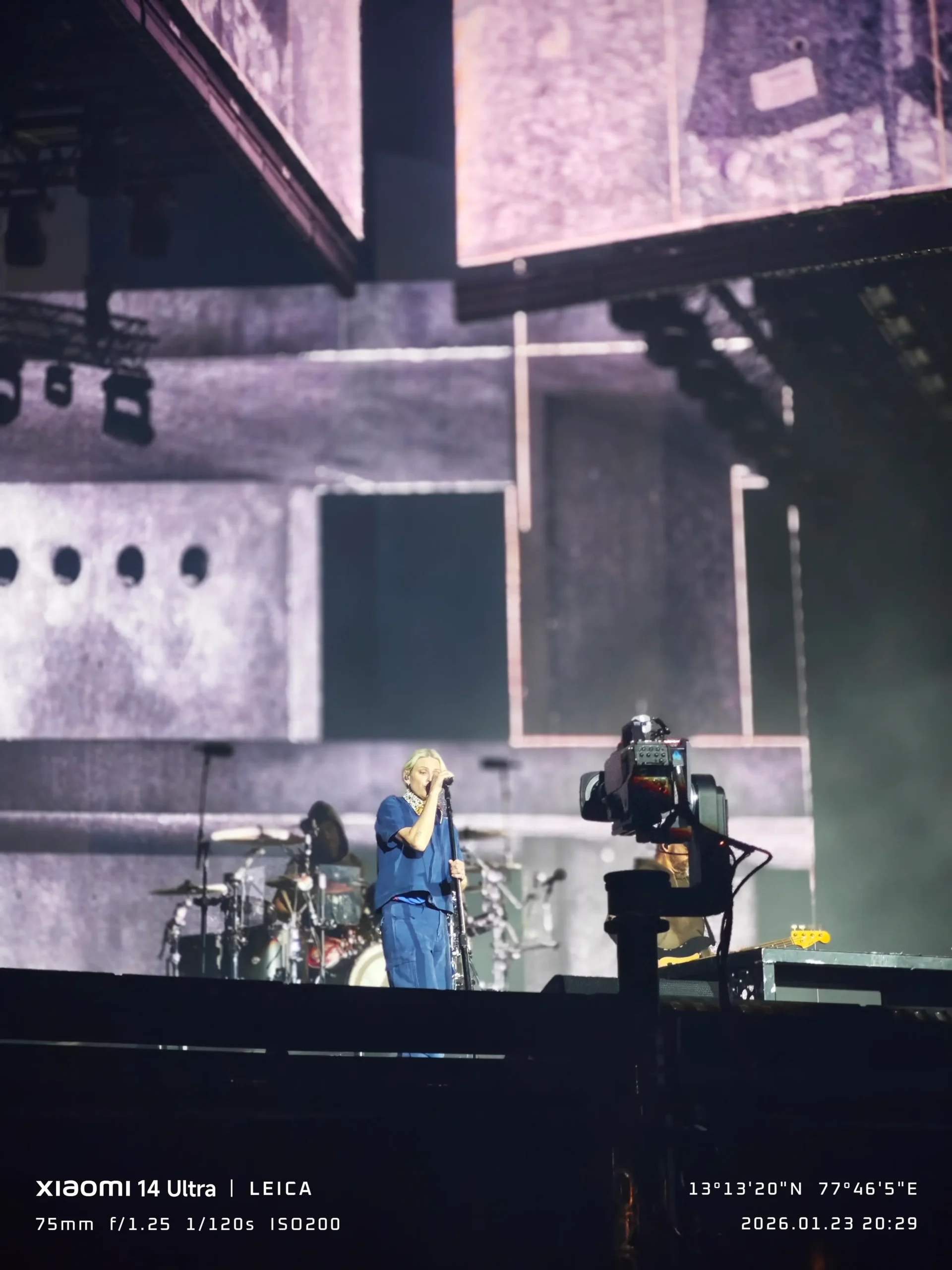
That’s the first truth about flagship phone cameras: they win on immediacy. Not specs. Not sensor size. Just the fact that the phone is already in your hand.
Street photography — where the phone almost always wins
Street photography is about being invisible and being fast. Pocket cameras are neither. They are dedicated devices that you have to hold up consciously. People notice. The moment changes when they do.
A phone is a phone. People see you on your phone and don’t think twice. You can shoot from hip height, adjust framing without bringing anything to eye level, and capture something without the subject shifting into a “I’m being photographed” posture.
Flagship phones today — whether you’re on a Xiaomi, a Samsung, a Pixel, or an iPhone — have camera systems that handle variable lighting, telephoto reach, and low light well enough that you’re not compromising much by choosing the phone. You’re just choosing speed and invisibility over technical perfection.
There are situations where a pocket camera pulls ahead even on streets — a market scene you want to capture as video with buttery stabilization, a wide shot where you want the cinematic depth. But those are planned shots. Street photography is rarely planned.
Quick photos while traveling
This is where people often oversimplify. Travel photography covers an enormous range of situations, and the honest answer is that both devices earn their place depending on which part of travel you’re in.
Arriving somewhere new, walking through a busy station, grabbing food at a roadside stall, photographing a friend mid-laugh at a viewpoint — phone, every time. The friction of pulling out a pocket camera, getting it ready, and framing while life is moving around you is real friction that costs you actual moments.
But once you slow down — once you’re standing at a beach and the light is doing something interesting, or you’ve found a quiet temple courtyard and have five minutes actually to think — the pocket camera earns its place. A good sensor in a dedicated device handles dynamic range differently. Shadows hold detail. Skies don’t blow out as easily. The image doesn’t just look good on your phone screen; it holds up on a large display, in print, wherever you eventually use it.
The mistake is treating this as a binary choice when traveling. Carry both if you can. Choose by situation, not by habit.
Taking people’s pictures — the phone wins, with one exception
When someone asks for a photo, it’s almost always their phone they hand you. But even when you’re the one choosing — shooting a friend, a group, a portrait of someone you’ve met — the phone has a meaningful advantage: you can show them the result immediately, on a screen they can read in daylight, and retake without any of it feeling like a production.
The exception is when you want to give someone a genuinely good portrait. A pocket camera with good light and a little distance produces a rendering that computational photography on a phone is still trying to catch up to. If you have time and they’re willing to wait, the dedicated camera wins.
Most of the time, people aren’t willing to wait. Most of the time, they don’t need to.
Controlled shoots — the pocket camera’s territory, clearly
This is where I stop arguing for the phone. Controlled shoots mean you have time, intention, and a specific outcome in mind. Properly planned travel content, videos where stabilization and dynamic range matter, anything you’re going to edit seriously — a good pocket camera is doing things the phone physically cannot replicate, regardless of how good processing has gotten.
If you’re shooting for anything beyond personal use — a client, a channel, something you’ll sit down and edit — the dedicated camera earns the extra weight in the bag every time.
The honest summary
The phone wins when you’re moving, when the moment is short, when being inconspicuous matters, and when you’re shooting people who’d stiffen up in front of a dedicated camera. The pocket camera wins when you have time, when you’re shooting something you’ve already decided to shoot, and when the output needs to hold up at scale.
Most of my best travel photos are from my phone. Most of my best travel footage is from the pocket camera.
Both answers are true. Neither one makes the other obsolete.
Got a different read on this? I’m genuinely curious about how other people split between devices. Drop it in the comments.
